
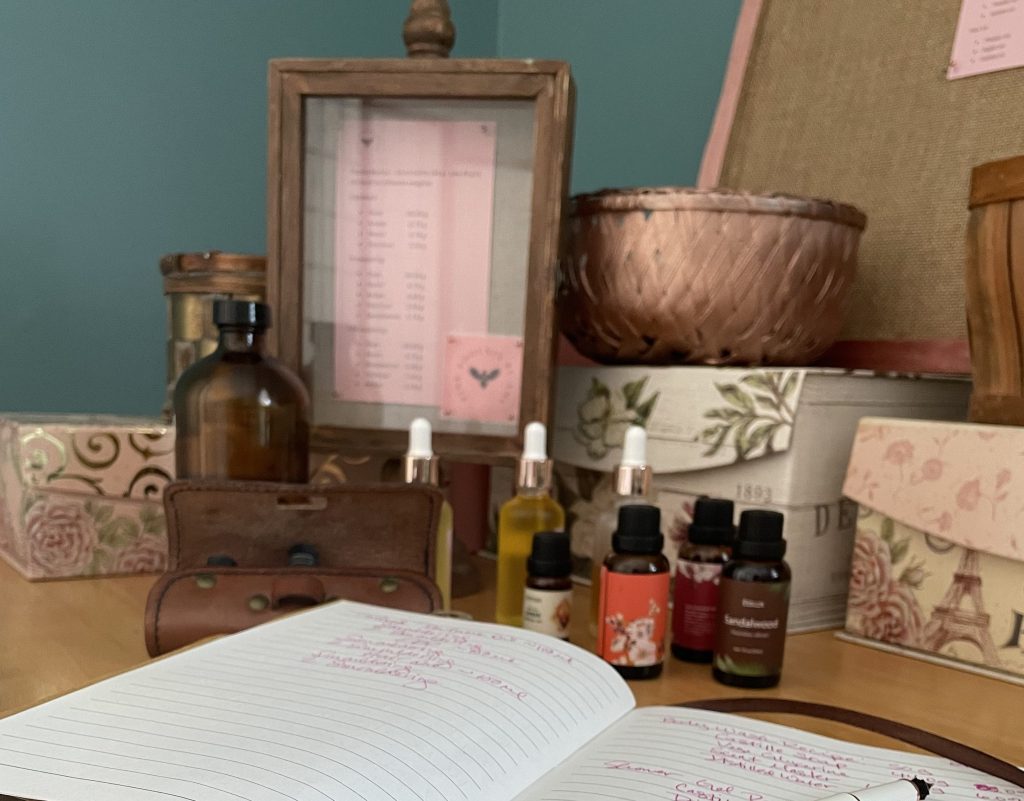
Pip: There is a studio in northwest Indiana where someone is standing over a blending bench, holding a pipette in one hand and, apparently, the entire philosophy of perception in the other.
Mara: That's the territory Amy is working in — how fragrance is built, how it behaves on skin, and what a single perfume can do when five notes finally stop being five things and become one. Let's start with the craft itself.
Fragrance Craft And Composition
Pip: The central question here is whether perfumery is a science you feel your way through or an art you measure — and the answer turns out to be that the tension between those two things is actually the whole point.
Mara: The post frames it precisely: "Natural perfumery lives in that tension: a discipline that asks for rigor and restraint, and an art that insists on instinct, emotion, and trust in the living materials themselves."
Pip: So the chemistry is real — evaporation curves, volatility, dilution ratios — but it only sets the stage. What the chemistry cannot do is tell you when the blend stops being a list of ingredients and becomes a single presence.
Mara: Right, and the post walks through how that actually works structurally. Top notes are light, impatient molecules — citrus lifts and vanishes. Base notes like sandalwood's santalols stay close to skin for hours. The middle layer, florals and herbs, bridges the two.
Pip: Which is less mystical than it sounds — it's basically a timed relay race run by molecules, and the perfumer's job is to coach them without being able to see the track.
Mara: Concentration is part of that coaching. The post notes that patchouli undiluted reads as "deep soil, wet leaves, a dark room," but given space in alcohol or oil, it thins to something that reveals "chocolate, tea, or even a faint plum-like nuance."
Pip: That reframe matters. It's not about adding less of something you dislike — it's that the same material is genuinely a different instrument at different volumes.
Mara: And the nose itself is a variable. Olfactory receptors fatigue; the post is direct that stepping away, resting, smelling coffee beans — those pauses are "as much a part of blending as any pipette."
Pip: All of this lands in Smouldering, the second piece, which is essentially a note-by-note account of what that science produces when it works. Five ingredients — rose, neroli, amber, patchouli, sandalwood — and the post traces exactly how each one reshapes the others.
Mara: Sandalwood extending neroli's life, patchouli grounding rose so its sweetness never tips into confection, amber slowing everything down until the top notes become, as the post puts it, "an aromatic veil rather than a fleeting sparkle."
Pip: The instinct piece is harder to pin down, but the post is honest about it — some blends follow every rule and feel hollow; others break the logic and land as an immediate yes before you can name why.
Mara: That's where skin enters. Body heat, pH, individual microbiome — a rose and sandalwood accord that reads as "late-afternoon sun on one wrist may become more shadowed and resinous on another." The same perfume, genuinely different stories.
Pip: Which means the closing target — that moment when the blend becomes one continuous presence rather than parts — can't be engineered on schedule. It arrives, and you recognize it.
Mara: And from there, the question becomes what you do with that recognition once it's bottled and on someone's skin.
Pip: Science decides which voice you hear first. Instinct decides when to stop adjusting. Skin decides what the story actually becomes.
Mara: Next time, we'll see where that story goes next.
 Pink Phoenix by Amy
Leave a comment