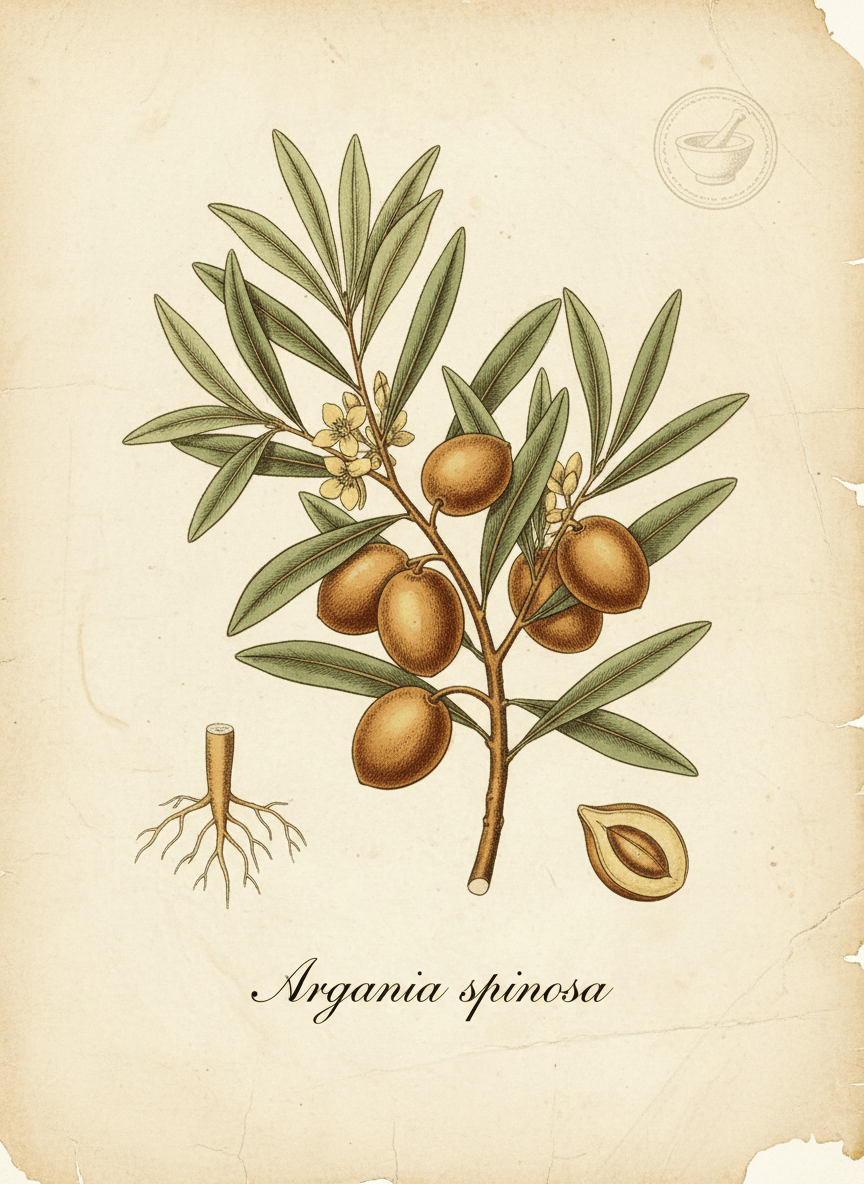
There are certain oils that seem to hold sunlight in their depths, and argan oil is one of them — an amber-gold elixir pressed from the small, resilient fruits of the Argania spinosa tree that grows only in the dry, stony landscapes of southwestern Morocco. Rich in essential fatty acids and vitamin E, this “liquid gold” moves between the worlds of natural perfumery and botanical skincare with ease, softening, protecting, and lending a quiet, silky radiance wherever it touches. At Pink Phoenix by Amy, we are drawn to ingredients that carry both story and substance, and argan oil offers both: a luxurious yet grounded base that supports our natural fragrances while nurturing the skin they rest upon.
Medicinal Uses: The Science Within the Scent
Argan oil is celebrated for its unusually high vitamin E content, a family of tocopherols that act as powerful antioxidants, guarding the skin against oxidative stress from daily life — sun, wind, and the quiet accumulation of environmental aggressors. These antioxidant compounds work in harmony with its generous profile of essential fatty acids, including oleic and linoleic acids, which help to support the skin’s barrier function, keeping hydration where it belongs and lending a plump, supple feel to the complexion. In our work at Pink Phoenix by Amy, we value this balance of protection and nourishment, where the science behind the oil gently underpins the sensory pleasure of wearing it.
On the skin, argan oil is both deeply moisturizing and surprisingly lightweight, absorbing readily without leaving a heavy or greasy film. This makes it an ideal companion for dry and mature skin types, which often need lipids that can soften the appearance of fine lines while respecting the skin’s own rhythms. The oil’s emollient nature helps to smooth rough or flaky areas, while its replenishing fatty acids support a more even, radiant texture over time. Used consistently, argan oil can lend a sense of comfort and ease to skin that feels tight, parched, or weather-worn, cocooning it in a soft, breathable veil.
Beyond the face, argan oil has long been loved for the way it touches hair and scalp with quiet transformation. A few drops worked through the lengths can add a gentle, reflective shine, helping to tame frizz and soften the feeling of dryness without weighing the hair down. Massaged into the scalp, it can bring soothing moisture to areas that feel tight or flaky, supporting a more balanced, comfortable environment at the root. In our studio, we see it as a bridge between skincare and haircare — one golden thread that can run through your rituals from crown to collarbone.
Argan oil can also be a calming ally for skin that feels inflamed or irritated, thanks to its blend of soothing lipids and naturally occurring antioxidants. While everyone’s skin is unique, many people find that this oil offers a sense of relief when used on areas that have been overexposed to wind, sun, or harsh products. Its gentle, skin-compatible profile and relative oxidative stability make it a beautiful carrier oil in aromatherapy blends, diluting essential oils to safe levels while supporting their aromatic qualities and adding its own subtle, nutty warmth to the overall experience. Within Pink Phoenix by Amy formulations, argan oil often serves as a quiet anchor — the base that cradles our essential oil compositions and helps them wear comfortably on the skin.
The information shared here is intended for educational purposes only and is not a substitute for professional medical advice, diagnosis, or treatment. We always encourage you to consult with a qualified healthcare provider before introducing new ingredients into your personal wellness or skincare routine, especially if you have specific concerns, conditions, or sensitivities.
Cultural & Historical Significance: Liquid Gold of the Atlas
Long before argan oil appeared on ingredient lists and beauty counters around the world, it lived at the heart of daily life for Amazigh (Berber) women in the dry valleys and hillsides of southwestern Morocco. For centuries, these women have gathered the fallen fruits of the Argania spinosa, patiently cracking the hard outer shells by hand to reach the precious kernels within. Through slow, careful grinding and pressing, they transform these kernels into a fragrant, golden oil — an ancestral practice that is as much a rhythm of community and care as it is a method of extraction. In this way, argan oil is more than an ingredient; it is part of an intergenerational lineage of knowledge, woven through the lives and stories of the women who have tended and transformed it.
Within traditional Moroccan life, argan oil has played a role that crosses the boundaries between nourishment, beauty, and medicine. The culinary form of the oil, roasted and richer in flavor, is drizzled over bread, couscous, and salads, offering both taste and sustenance in the form of healthy fats. The unroasted oil has long been used to soften skin and hair, to soothe areas of dryness or discomfort, and to support overall vitality — a multi-purpose ally in households that rely on plant wisdom to meet many daily needs. European explorers and traders encountered this oil as they traveled through North Africa, carrying stories of its rarity and remarkable properties back across the Mediterranean, where it captured the imagination of apothecaries and, later, of the modern beauty world.
The argan forest itself is recognized today as a unique and precious biosphere, earning UNESCO protection as an ecosystem that supports not only the trees, but also the communities, animals, and traditional ways of life tied to them. These thorny, drought-resistant trees, capable of living for centuries in harsh conditions, hold the soil in place and offer shade, forage, and economic possibility in a landscape where resources are often scarce. As global demand for argan oil surged in the early 2000s and the phrase “liquid gold” began to echo across beauty campaigns, the work of women’s cooperatives became increasingly visible — not just as producers, but as guardians of a delicate balance between economic opportunity and ecological responsibility.
Today, ethical sourcing of argan oil is inseparable from the fair-trade cooperatives that center Amazigh women’s labor, knowledge, and leadership. These cooperative structures offer pathways to financial independence, education, and community development, while encouraging sustainable harvesting practices that respect the slow-growing, deeply rooted nature of the trees themselves. In the silhouette of the argan tree — gnarled, thorned, and steadfast, surviving drought and wind for hundreds of years — many see a symbol of endurance and grounded feminine wisdom. Its branches hold stories of patience, strength, and quiet resilience, qualities that resonate deeply with our own philosophy of botanical beauty and the steady, transformative power of time.
Closing Reflection: Gold from Ancient Roots
To invite argan oil into our work at Pink Phoenix by Amy is to welcome a strand of sun-warmed history into the studio — a golden thread that travels from the rugged Atlas foothills to the gentle cadence of small-batch blending in northwest Indiana. In its quiet sheen and comforting softness, we feel the presence of all that it carries: the hands that have pressed it for generations, the thorny trees that have stood through seasons of scarcity and abundance, the patient wisdom of a landscape that asks us to move slowly and with reverence. As we pair this oil with pure essential oils and organic botanicals, we are reminded that true luxury is not about excess, but about intimacy — knowing where an ingredient comes from, how it was tended, and what it offers to the skin and the spirit. Argan oil, with its amber glow and ancient roots, becomes one more way we honor the alchemy of nature, crafting fragrances and rituals that speak softly of renewal, resilience, and the beauty of rising — again and again — from the heart of the earth.
 Pink Phoenix by Amy
Leave a comment