
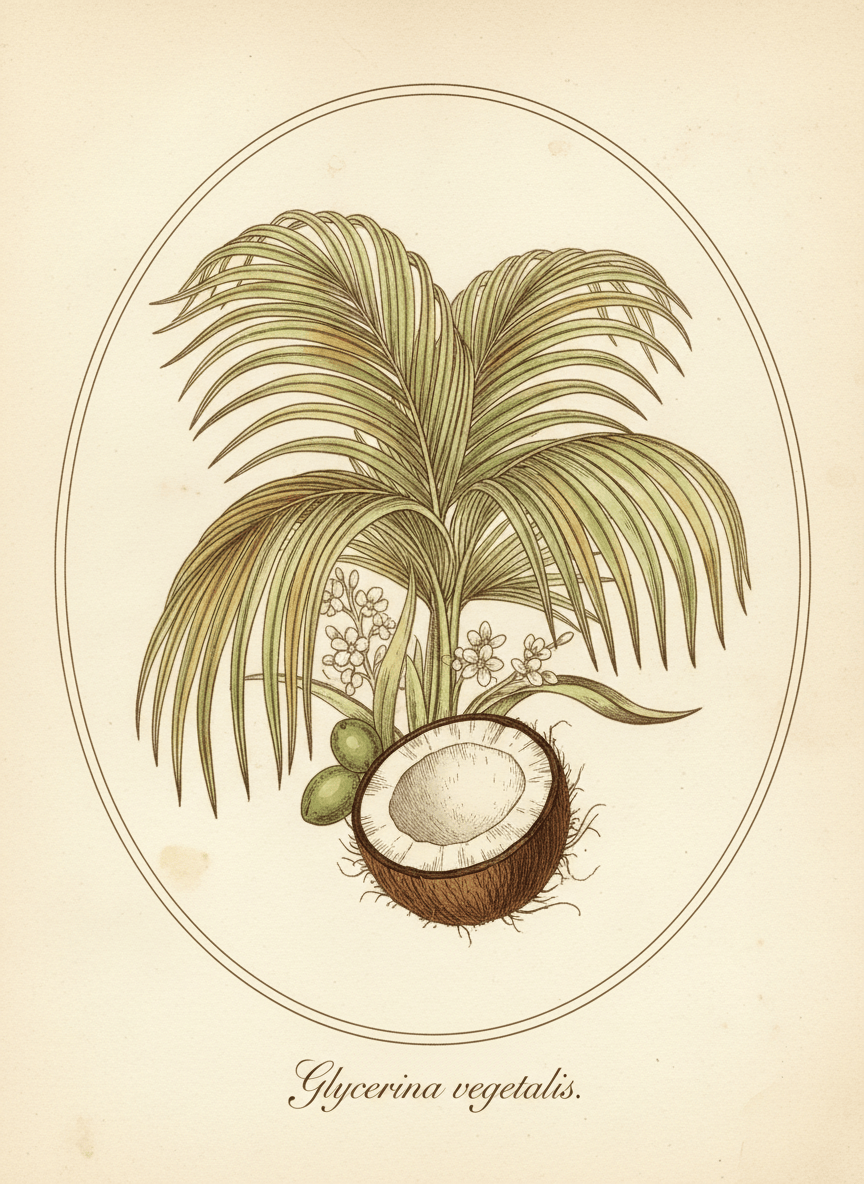
Medicinal Uses: The Science Within the Scent
Vegetable glycerine, also known as vegetable glycerol, is one of the quiet workhorses of modern herbal and natural skincare. This clear, syrupy liquid is born from plant oils, yet it carries no fragrance of its own — only a gentle sweetness on the tongue and an extraordinary affinity for water. That affinity makes it an exceptional humectant: it draws moisture from the air and binds it to the skin, helping to replenish the skin’s natural hydration barrier. Where many conventional products chase instant results, vegetable glycerine works gradually and faithfully, helping the complexion feel supple, comfortable, and deeply cared for.
Because it attracts and holds onto water, vegetable glycerine is often woven into the base of serums, toners, and lotions. In these formulas, it acts as a bridge between water-based botanicals and the skin, helping nutrients glide across the surface and sink more evenly into parched areas. When paired with soothing hydrosols and essential oils, glycerine can transform a simple mist or serum into a veil of lasting moisture. The result is skin that looks softly luminous rather than tight or overtreated, with fine lines and dry patches appearing less pronounced.
Beyond its hydrating gifts, vegetable glycerine is a gentle emollient — it helps soften and smooth the skin’s texture. By supporting the skin’s own lipid barrier, it can reduce the feeling of roughness on elbows, hands, and cheeks exposed to wind or sun. This dual role as both humectant and emollient is especially valuable in natural formulations, where each ingredient is asked to do more than one job. In a well-balanced blend, glycerine becomes the quiet backbone that keeps a product feeling cushiony on application, never harsh or stripping.
Historically, healers also recognized these properties in more practical, medicinal ways. Apothecaries and early pharmacists used glycerine in ointments and salves to keep wound dressings moist, a key factor in aiding the skin’s own repair processes. Its softness and non-irritating nature made it particularly suitable for tender, compromised skin that could not tolerate stronger agents. While modern medicine has grown more complex, the tradition of using glycerine in gentle, supportive skincare for sensitive or reactive complexions continues, especially in formulations that avoid synthetic fragrances and harsh additives.
This discussion is offered purely for educational and informational purposes, reflecting traditional and contemporary uses of vegetable glycerine in skincare. It is not medical advice, and it should not replace consultation with a qualified healthcare professional for any condition or concern.
Cultural & Historical Significance: From Apothecary Shelves to Everyday Rituals
The story of vegetable glycerine begins in the late 18th century, in the laboratory of Swedish chemist Carl Wilhelm Scheele. In 1779, while experimenting with olive oil and lead oxide, Scheele accidentally liberated a new, sweet-tasting substance that he could not have known would shape centuries of beauty and medicine. He called it “the sweet principle of fat,” and though the process he used would soon be abandoned for safer methods, his discovery opened the door to understanding the gentle, water-loving molecule we now recognize as glycerine. From the start, it occupied an intriguing space between the botanical world and emerging chemical science.
By the 19th century, vegetable glycerine had become a staple in pharmacy and soap-making, adored for its ability to soften, emulsify, and preserve. In apothecaries, it served as a solvent for plant extracts, allowing tinctures and syrups to be prepared with less reliance on alcohol. In the washlines and sitting rooms of Victorian households, glycerine-laced soaps and creams gained a reputation for refinement and gentleness, promising to protect delicate complexions from soot, cold, and the harshness of early industrial cities. For many, these elegant preparations were their first experience of what we might now call “self-care.”
Victorian beauty culture in particular embraced glycerine as a symbol of cultivated femininity and modern science working hand in hand. Advertisements praised its ability to keep hands soft despite endless domestic work, and it appeared in recipes for homemade skin tonics passed between women, tucked into journals, and clipped from ladies’ magazines. At the same time, physicians and pharmacists relied on glycerine for medicinal preparations, using it to sweeten bitter remedies and to deliver moisture to dry membranes and irritated skin. It quietly blurred the line between beauty and health, between vanity and care.
In the 20th century, glycerine’s trajectory widened dramatically. During the First and Second World Wars, it became a strategic industrial material as a precursor to nitroglycerin, a powerful explosive. This dual identity — softening the hands at home while fueling the machinery of war abroad — underscores how profoundly embedded glycerine became in modern life. After the wars, as chemistry surged forward and synthetic ingredients filled store shelves, glycerine remained, often overshadowed but still present, a dependable component in both mainstream and niche formulations.
Today, we are witnessing a renaissance of vegetable glycerine within natural and botanical skincare. As more people seek products that are kinder to the skin and the environment, this humble, plant-derived liquid has reemerged as a trusted ally. In small-batch workshops and artisan studios, it is reclaimed from the anonymity of ingredient lists and honored again as a bridge between traditional apothecary wisdom and contemporary green formulations. In this way, vegetable glycerine tells a story of continuity: from Scheele’s experiments to Victorian vanities to the glass bottles and amber vials of modern natural perfumers and skincare makers.
Closing Reflection: The Quiet Alchemy of Everyday Grace
There is a particular beauty in ingredients like vegetable glycerine — clear, nearly invisible, yet essential to the experience of softness, comfort, and care. It is one of the quiet, unsung heroes of beauty, helping botanicals glide smoothly across the skin, lending radiance without demanding attention. At Pink Phoenix by Amy in northwest Indiana, this same spirit infuses each small-batch, handcrafted creation: fragrances and skincare made with essential oils and organic ingredients, thoughtfully composed without synthetics. In every drop that rests against the wrist or settles into the skin, there is a whisper of transformation — an invitation to honor the subtle alchemy of everyday rituals and the gentle power of nature at work beneath the surface.
 Pink Phoenix by Amy
Leave a comment