
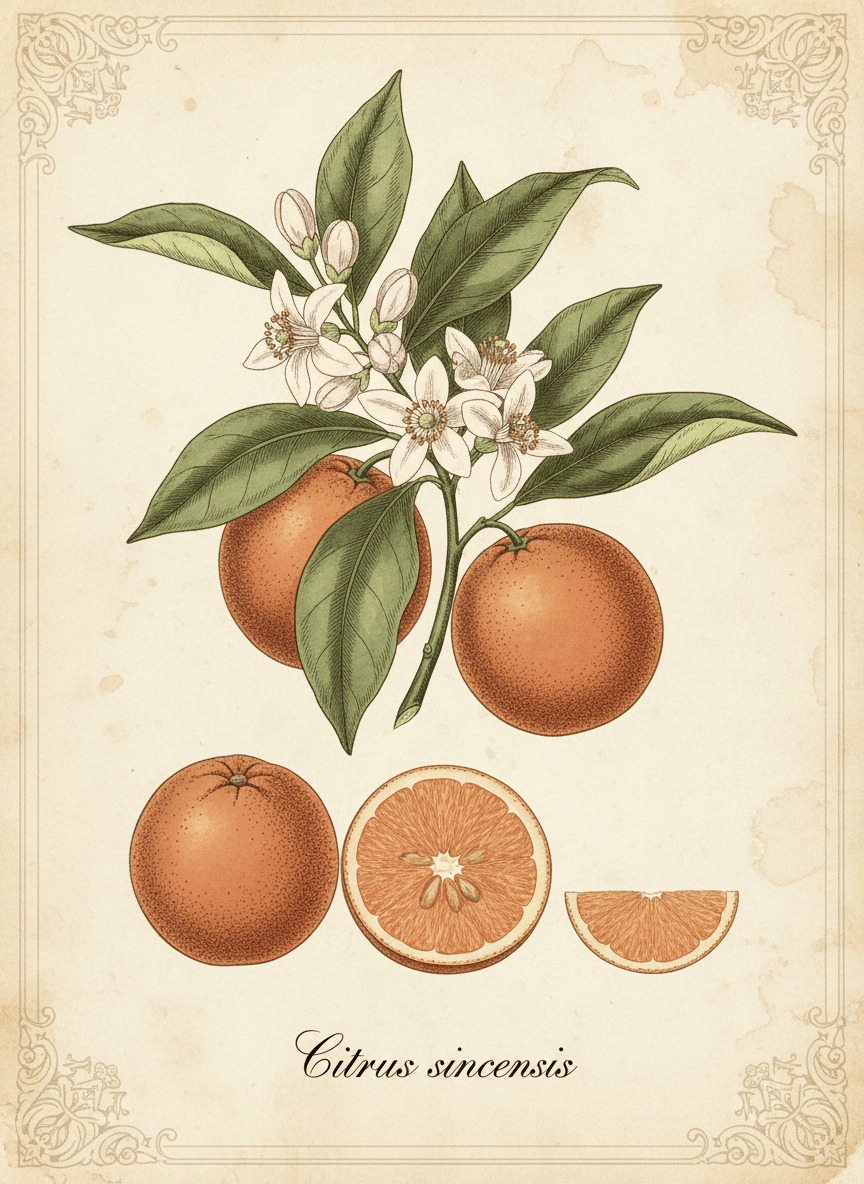
Medicinal Uses: The Science Within the Scent
Sweet orange essential oil (Citrus sinensis), cold-pressed from sun-bright rinds, is often described as bottled optimism. Its cheerful, citrusy aroma has been studied for its capacity to gently lift mood, soften emotional heaviness, and invite a sense of lightness into the nervous system. In aromatherapy, diffusing or inhaling sweet orange has long been associated with easing tension, dispelling minor blues, and creating an atmosphere that feels both cozy and luminous at once.
Modern research has begun to catch up to traditional wisdom. In several clinical and therapeutic settings, inhalation of sweet orange essential oil has been associated with reduced subjective feelings of anxiety and greater calm, particularly before stressful procedures or in high-pressure environments. While individual experiences vary, these findings echo what many practitioners have observed for generations: that the bright, familiar scent of orange can steady the breath and soften the body’s stress response, helping the mind feel just a little less burdened.
Chemically, sweet orange essential oil is rich in limonene, a citrus-derived compound studied for its antioxidant properties. Antioxidants help the body address oxidative stress, one of the subtle background processes that can affect how vibrant and resilient we feel over time. While essential oils are not a substitute for medical treatment or a balanced lifestyle, the presence of limonene adds another dimension to this oil’s reputation for supporting an overall sense of well-being when used thoughtfully in daily rituals.
Topically, diluted sweet orange essential oil is often included in skincare for its brightening and gently cleansing qualities. It can help refresh the appearance of dull skin and support a more radiant-looking complexion, especially when paired with nourishing carriers and botanicals. In natural perfumery, it serves as a sparkling top note, opening a fragrance with effervescent clarity before gracefully yielding to deeper florals, resins, or woods beneath.
Because sweet orange is a citrus oil, some individuals may experience increased sensitivity to sunlight when it is applied to the skin, especially at higher concentrations. Careful dilution, patch testing, and avoiding direct UV exposure on freshly anointed areas are important ways to use this oil safely. All information shared here is intended for educational purposes only and is not a substitute for professional medical guidance, diagnosis, or treatment. Always consult a qualified healthcare provider with any health-related questions.
Cultural & Historical Significance: Golden Fruit on the Silk Road
The story of sweet orange begins far from today’s groves and glass bottles. Oranges are believed to have originated in regions of China and Southeast Asia, where citrus fruits were cherished for their refreshing flavor, enlivening scent, and symbolic resonance. In these early cultures, the bright, round fruits evoked abundance, good fortune, and renewal, their vibrant color mirroring the warmth of the sun itself.
As trade routes unfurled across continents, oranges traveled along the Silk Road and maritime paths, slowly weaving their way westward. Merchants and travelers carried both the fruits and their stories, introducing this “golden fruit” to new palates and imaginations. In time, citrus trees took root in Mediterranean climates, transforming landscapes with their glossy leaves, fragrant blossoms, and glowing fruit suspended like little suns between branches.
By the medieval and Renaissance periods in Europe, oranges had become powerful symbols of luxury and refinement. Orangeries—elegant, glass-fronted buildings designed to protect citrus trees from winter cold—appeared on the grounds of aristocratic estates. These spaces were not only practical hothouses, but also stages for spectacle, where the presence of citrus signaled wealth, worldliness, and a cultivated appreciation for rare botanical treasures.
In perfumery, both orange blossom and orange peel have long held honored places. The blossom’s floral delicacy and the rind’s sparkling zest have been woven into colognes, eaux de toilette, and traditional citrus accords for centuries. Sweet orange essential oil, obtained by pressing the rind, became a way to preserve and concentrate this brightness, allowing its joyful top note to illuminate compositions from the very first inhalation.
On the other side of the Atlantic, citrus cultivation reshaped entire regions. In Florida and California, expansive groves and the rise of the citrus trade defined landscapes, economies, and cultural identities. The orange became a symbol of sunshine, health, and possibility—a promise of sweetness at the edge of winter, and of prosperity rooted in the land. Today, when we uncap a small vial of sweet orange essential oil, we are, in a sense, uncorking this long history of travel, aspiration, and delight.
Closing Reflection: A Quiet Orchard of Light
There is something quietly miraculous about the way sweet orange essential oil gathers sunlight, memory, and emotion into a single, shimmering breath. It carries the echo of distant orchards, the hush of Renaissance orangeries, and the warmth of modern kitchens where citrus still brightens grey days. At Pink Phoenix by Amy, in a small town in northwest Indiana, this same golden note becomes part of a larger story—one of small-batch, handcrafted fragrance made with essential oils and organic ingredients, never synthetics. In these carefully composed blends, sweet orange does what it has always done: it offers a moment of brightness, a whisper of joy, and a gentle reminder that renewal is never far away, waiting just beneath the surface of the everyday.
 Pink Phoenix by Amy
Leave a comment