
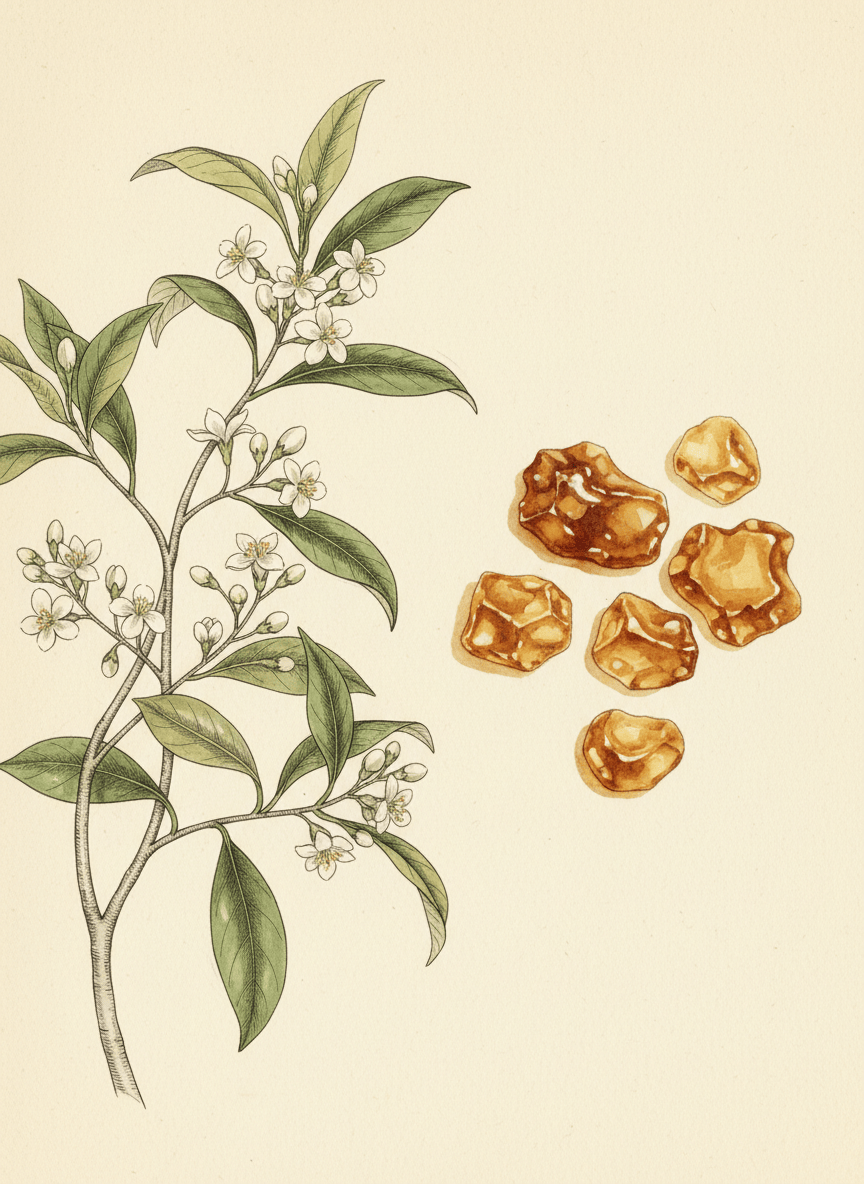
Benzoin Resin: A Soft, Golden Anchor in Natural Perfumery
In the world of natural fragrance, some ingredients blaze with bright, fleeting light, while others glow more quietly, holding everything together. Benzoin resin belongs to this second, subtler kind of magic. At Pink Phoenix by Amy, where every fragrance is crafted with essential oils and organic ingredients, benzoin appears again and again as a warm, honeyed thread that anchors and softens a composition without ever clamoring for attention.
What Is Benzoin Resin?
Benzoin is a natural aromatic resin collected from trees in the Styrax family. When the bark is gently cut, the tree exudes a pale, sticky sap that slowly hardens into amber-toned tears. These resinous tears are then carefully processed into a thick, fragrant material used by perfumers, incense makers, and traditional artisans across the world.
Because it is a true botanical resin rather than a synthetic compound, benzoin carries a complexity that is difficult to imitate in the lab. Its scent shifts and unfolds over time, lending natural perfumes both depth and a sense of quiet, lived-in warmth.
Where Benzoin Comes From
Most perfumery-grade benzoin comes from Southeast Asia, where it has been cultivated and harvested for generations. Two regions are especially known for their benzoin: Siam (historically associated with Thailand, but today largely from Laos) and Sumatra (part of modern-day Indonesia). The climate, soil, and local processing methods all shape the final aromatic profile, just as they would with wine grapes or tea leaves.
After harvesting, the resin is typically tinctured in alcohol or turned into an absolute to become workable in natural perfumery. These traditional methods honor the resin’s botanical character while allowing it to blend smoothly with essential oils and other natural ingredients.
How Benzoin Smells: Cashmere for the Senses
Benzoin is often described as balsamic, vanilla-like, and gently spicy. Imagine the soft sweetness of vanilla, the comfort of warm milk with honey, and the faintest echo of polished woods and incense. It feels less like a sharp note and more like a cushion that everything else rests upon.
On the skin, benzoin can suggest:
- Warm caramel and creamy vanilla
- A whisper of cinnamon or clove, never harsh
- Soft woods and faint smoke, like incense from the next room
- A cozy, “skin-scent” effect that feels caressing rather than perfumey
Because of this, benzoin is treasured in natural perfumery for its ability to add comfort, roundness, and a feeling of golden light to a composition.
A Brief History of Benzoin: From Temple Smoke to Artisan Studios
Long before benzoin found its way into modern fragrance houses, it was burned as incense and used in ritual offerings. In temples, homes, and healing spaces across Asia and later the Middle East and Europe, the resin’s smoke was valued for its sweet, uplifting aroma and its ability to lend a sense of quiet reverence to a room.
Historically, benzoin appeared in incense blends, perfumed oils, and botanical balms. It was often combined with other precious materials like frankincense, myrrh, and spices, forming the fragrant backbone of many traditional preparations. Today, natural perfumers continue that lineage, weaving benzoin into modern botanical fragrances that still carry a hint of ritual and reflection.
How Benzoin Behaves in Fragrance
In perfumery, benzoin is considered a base note—a material that reveals itself slowly and lingers longest on the skin. When you first apply a natural perfume, you may notice the brightness of citrus or the brightness of florals. As those top and heart notes gradually soften, benzoin begins to bloom, extending the life of the composition and wrapping the remaining notes in softness.
This “late-blooming” character is part of what makes benzoin such a beloved fixative in natural fragrance. As a fixative, benzoin helps more volatile ingredients—like citrus, delicate flowers, and spicy top notes—stay present a little longer than they would on their own. Rather than changing their personality, it gives them a smooth, warm backdrop, much like a velvet lining allows jewels to shine.
In a natural perfume, benzoin often:
- Adds sweetness without becoming sugary
- Softens sharp or dry compositions
- Bridges resinous, woody, and floral notes into a cohesive whole
- Enhances the sensation of warmth and skin-like intimacy
Siam vs. Sumatra Benzoin: Two Expressions of Warmth
While “benzoin” is often used as a single, simple term, there are distinct aromatic personalities within it. Two of the most cherished types in perfumery are Siam benzoin and Sumatra benzoin. Both come from Styrax trees, but they differ in scent nuance and mood.
Siam Benzoin: Silky, Gourmand Comfort
Siam benzoin is typically smoother, creamier, and more overtly sweet. It often leans strongly into its vanilla and caramel facets, with a plush, almost custard-like warmth.
Think of Siam benzoin as:
- Soft vanilla pudding with a drizzle of honey
- A faint hint of almond or milk chocolate
- A silky, rounded sweetness that invites you closer
In natural perfumery, Siam benzoin is beautiful in cozy, gourmand-leaning compositions and in intimate, skin-scent styles where you want warmth without heaviness.
Sumatra Benzoin: Resinous, Spiced Amber
Sumatra benzoin, by contrast, usually presents as a touch drier, more resinous, and more complex. It still offers sweetness, but with more incense, spice, and wood woven through.
Imagine Sumatra benzoin as:
- Amber resin warmed by candlelight
- A trace of cinnamon, clove, or nutmeg folded into vanilla
- A gentle smoky-woody undertone, like aged wood in a quiet room
This type of benzoin shines in more resinous, meditative perfumes—those that lean toward amber, incense, and woods. It creates a sense of depth and quiet sophistication, ideal for evening wear or contemplative moments.
Benzoin in Natural Perfume: Practical Notes for Scent Lovers
For those drawn to natural, plant-based fragrance, understanding benzoin can deepen your appreciation of how a perfume unfolds.
When you see benzoin listed in the ingredients of a Pink Phoenix by Amy fragrance, you can expect:
- Enhanced longevity without synthetics – Benzoin helps extend the life of more delicate notes using a purely natural, resin-based approach.
- A softer dry-down – As citrus or bright florals fade, benzoin brings a velvety, gently sweet finish that feels close to the skin.
- Comforting warmth – The balsamic character of benzoin adds a sense of coziness and emotional ease, without relying on artificial vanilla or sweeteners.
- Harmony between ingredients – Benzoin acts as a bridge note, weaving essential oils and other organic materials into a seamless, unified fragrance.
As with all botanicals, individual responses to benzoin can vary. If you know your skin is sensitive, it is always wise to patch test new fragrances and listen to how your body feels. At Pink Phoenix by Amy, formulas are composed with care, using essential oils and organic ingredients to honor both the wearer and the plants themselves.
Experiencing Benzoin with Pink Phoenix by Amy
In the Pink Phoenix by Amy studio, benzoin often appears as the quiet alchemist at the base of a fragrance. It cushions bright citrus, smooths the edges of spice, and cocoons florals in a mellow glow. Whether paired with rose, woods, or incense, it lends a sense of transformation and renewal—a gentle reminder that warmth often arrives in subtle, steady waves.
If you are drawn to natural perfumes that feel comforting yet refined, benzoin is an ingredient worth seeking out. Look for it in scent descriptions, notice how it shapes the dry-down, and let its golden sweetness guide you deeper into the world of botanical fragrance.
To explore benzoin in artisan perfumes crafted with essential oils and organic ingredients, visit the Pink Phoenix by Amy collection and discover which fragrance feels like your own quiet ember of warmth and renewal.


Leave a Reply